
test1_eng
# Drones: Technologies, Opportunities, and Applications
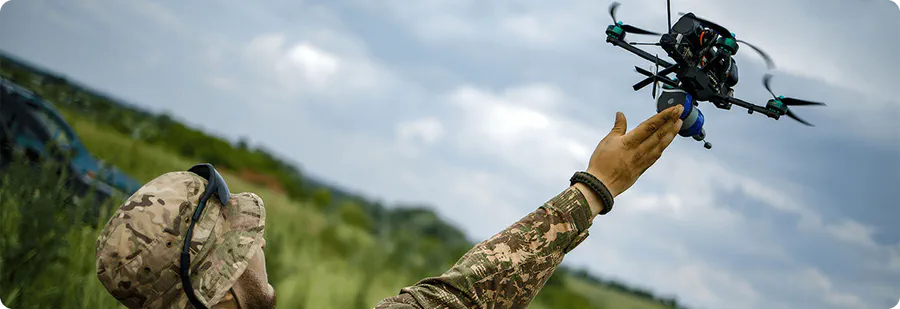
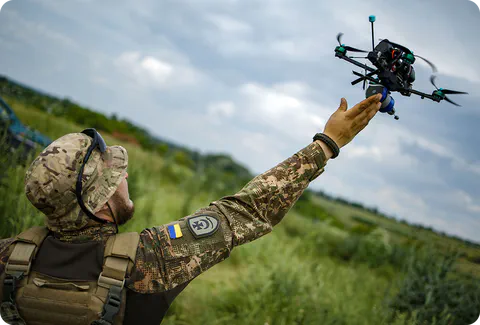
Drones (or Unmanned Aerial Vehicles, UAVs) are flying devices that do not require a pilot onboard for control. They are used in a variety of fields due to their advantages compared to traditional aircraft.
## Types of Drones
There are several main types of drones:
**Multirotors** — The most common type of drone, with multiple rotors (typically 4 or more). They are ideal for video and photo shooting, as well as for use in small and medium-sized spaces.
**Fixed-wing drones** — These resemble small airplanes and can achieve higher speeds and greater flight range. However, they are less stable for filming or performing precise tasks.
**Hybrid drones** — These combine the features of both multirotors and fixed-wing drones. They can take off vertically like multirotors but have greater range and speed, similar to airplanes.
## Applications of Drones
### 1. **Filming and Video Production**
Drones have gained popularity in the film industry, advertising, and for creating aerial photography and video footage. They allow filming from bird’s-eye perspectives, providing new opportunities for creative projects.
### 2. **Agriculture**
Drones are used by farmers to monitor crop conditions, apply fertilizers or pesticides precisely, and conduct aerial photography to assess harvests.
### 3. **Security and Law Enforcement**
Drones are actively used by law enforcement for surveillance, public order monitoring, and search-and-rescue operations.
### 4. **Delivery Services**
Courier companies, like Amazon, are experimenting with drone delivery services. This could significantly speed up the delivery process and reduce transportation costs.
### 5. **Medical Uses**
Drones are also used to deliver medicines and medical supplies, especially to remote areas where traditional transport might not be available.
## Drone Technologies
Modern drones are equipped with various technologies:
- **GPS Navigation** — allows for precise flight and location tracking.
- **Sensors and Cameras** — for data collection, filming, or monitoring situations.
- **Artificial Intelligence** — helps drones autonomously plan routes and adapt to environmental conditions.
## Challenges and the Future of Drones
While drone technology continues to develop, there are several challenges:
- **Legal Regulation** — there is a need for new standards and laws to ensure the safe use of drones in airspace.
- **Safety** — the increasing number of drones could lead to potential incidents involving people or other flying objects.
- **Ethical Issues** — for example, the use of drones in military applications raises debates regarding morality and ethics.
In the future, we might see even more development in drone technology, the integration of drones into transportation systems, and their active use in industries.
## Conclusion
Drones have become an essential tool in many fields. They are changing how traditional tasks are performed and opening up new opportunities for business, science, and even everyday life. However, to fully utilize their potential, further technological advancements and solutions to legal and ethical challenges are necessary.